
Agentic Vulnerability Remediation

SubImage agents prioritize vulnerable images that matter, generate repo-aware fix plans, and track remediation until the risk is gone.
subimage / vulnerabilities
Action Items23
CVEs152
Search packages...
Package
CVEs
Installed version(s)
Fixed version(s)
Severity
Alpine Linux xz
KEVinternet-exposed
5
5.6.1-r1
5.6.1-r2
1C2M2L
npm lodash
internet-exposedaffects 2 base images
3
4.17.154.17.20
4.17.21
2H1M
npm minimist
internet-exposed
2
1.2.50.2.3
1.2.60.2.4
2H
Alpine Linux zlib
2
1.3.1-r0
1.3.1-r1
1H1M
npm cross-spawn
affects 6 base images
4
7.0.4
7.0.5
1H3L
Python aiohttp
1
3.10.10
3.10.11
1H
Python PyJWT
1
2.10.02.10.12.11.0
2.12.0
1H
RubyGems rack
internet-exposed
1
2.2.83.0.9
2.2.8.13.0.9.1
1H
RubyGems rdoc
1
6.6.36.5.1
6.6.3.16.5.1.16.4.1.16.3.4.1
1H
Python urllib3
1
2.2.11.26.18
2.2.21.26.19
1M
Python requests
1
2.31.0
2.32.0
1M
RubyGems rexml
1
3.3.8
3.3.9
1M
Alpine Linux perl-module-scandeps
1
1.36-r0
1.37-r0
1M
screenshot

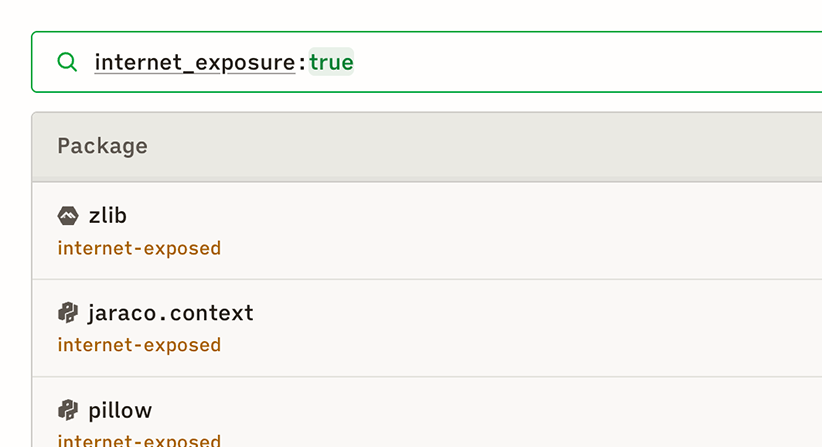
Exploitability-aware prioritization

Is the vulnerable package in a running container? Is that container internet-exposed? Is there a path from it to sensitive data? If not, the agent drops its priority.
screenshot

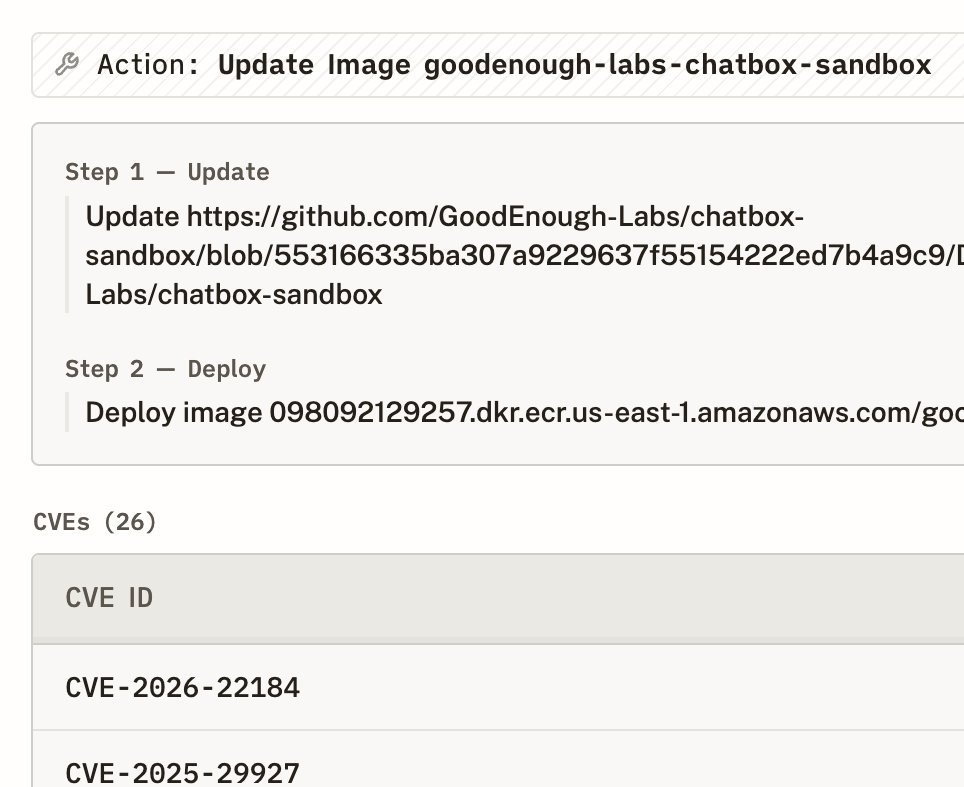
Agent-driven fix paths

Agents inspect the repo, Dockerfile, dependency graph, and base image lineage to produce the fewest actions that fix the most risk. Each step includes the file to change, current value, target value, and confidence.
screenshot

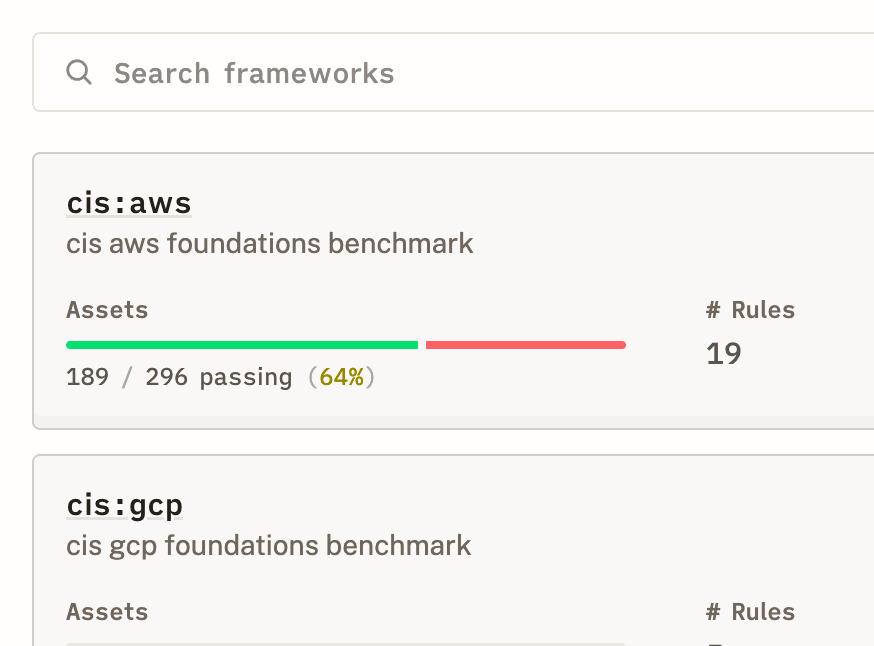
Compliance and security alignment

Each action item ties back to CVEs, packages, impacted images, running workloads, and rationale, so security and engineering teams can agree on what should be fixed first.
screenshot

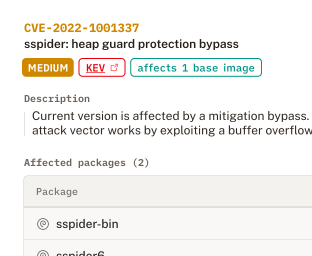
KEV and EPSS exploit intelligence

Known exploited vulnerabilities and EPSS probability are built into triage, so active exploitation signal is visible before teams spend time on lower-risk backlog.